
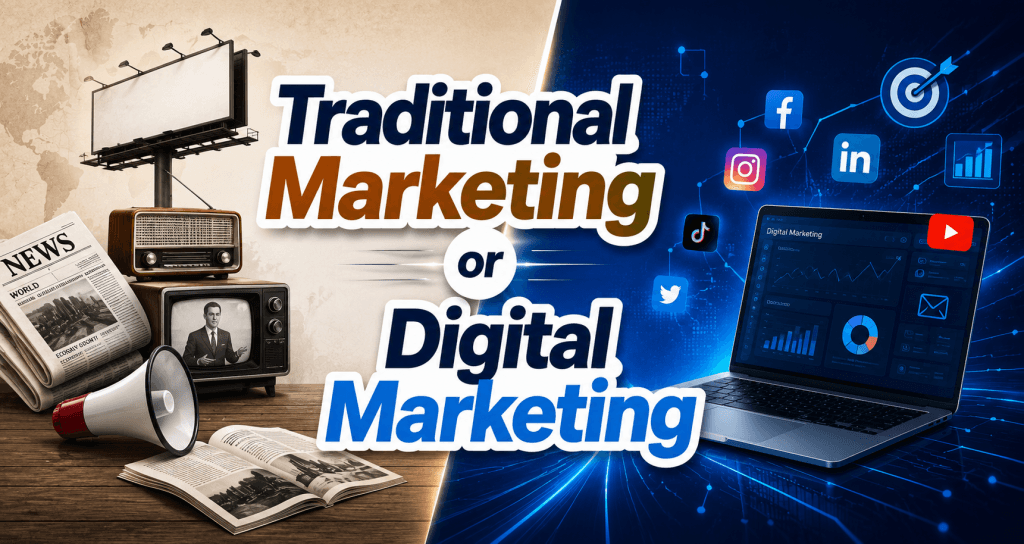
Traditional Marketing or Digital Marketing? If you’re running a business today, you’ve probably asked yourself this question at least once.
Should you invest in traditional marketing or digital marketing? It’s a fair question. Even with social media, Google Ads, and AI becoming part of everyday marketing, you still see billboards on highways, newspaper ads, radio commercials, and flyers in local shops. So, if digital marketing is growing so fast, why hasn’t traditional marketing disappeared? The truth is, both have their place. The better option depends on your business, your audience, your budget, and what you’re trying to achieve. There isn’t a single answer that works for everyone.
Let’s break it down in a simple way so you can decide what fits your business best.
What Is Traditional Marketing?
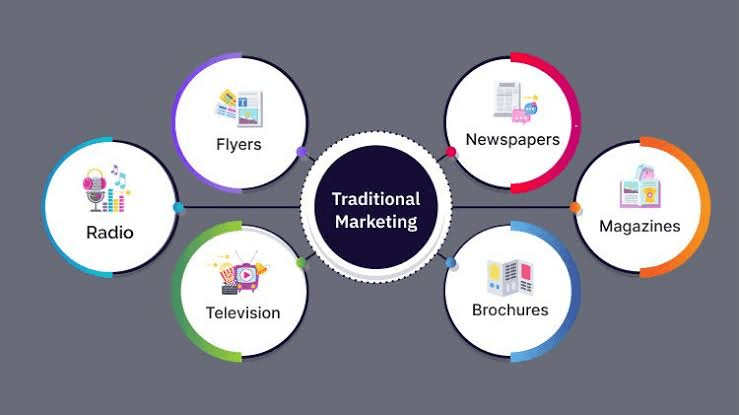
Traditional marketing includes all the promotional methods that existed before the internet became part of daily life.
Some common examples include:
- Newspaper advertisements
- Magazine ads
- Television commercials
- Radio advertisements
- Billboards
- Flyers and brochures
- Posters
- Direct mail
- Event sponsorships
Think about the last time you drove through a city. You probably noticed several billboards without even trying. That’s traditional marketing doing its job. Many local businesses still depend on these methods because they work well for nearby customers. For example, a restaurant opening in your neighborhood may distribute flyers around nearby apartments. A coaching institute might place banners near schools and colleges. These methods still attract attention because they reach people where they already are.
What Is Digital Marketing?
Digital marketing simply means promoting your business through the internet. Instead of waiting for people to notice your billboard, you reach them on the platforms they use every day.
This includes:
- Google Search
- Social media platforms
- Email marketing
- Search Engine Optimization (SEO)
- Google Ads
- Content marketing
- YouTube marketing
- WhatsApp marketing
- Influencer marketing
Imagine someone searches for “best bakery near me.” If your website appears on Google, that’s digital marketing. If they discover your business through Instagram or Facebook, that’s digital marketing too. The biggest difference is that people can interact with your business instantly. They can visit your website, send a message, call you, or even place an order within minutes.
Traditional Marketing or Digital Marketing: Understanding the Main Difference
At first glance, both seem to do the same thing. They help businesses attract customers. But the way they work is very different.
| Traditional Marketing | Digital Marketing |
|---|---|
| Offline channels | Online channels |
| Broad audience | Targeted audience |
| Difficult to measure | Easy to track results |
| Higher advertising costs | Suitable for almost every budget |
| Limited customer interaction | Two-way communication |
| Slower updates | Real-time changes |
One isn’t automatically better than the other. The right choice depends on your goals.
Cost Comparison
Let’s talk about money because that’s usually where most business owners begin. Traditional marketing often requires a bigger investment.
For example:
- Newspaper advertisements can cost thousands of rupees.
- TV commercials are expensive to produce and broadcast.
- Large billboards require design, printing, and rental costs.
Once your advertisement is printed or displayed, changing it usually means spending more money. Digital marketing works differently. You can start with a small budget. Even ₹500 or ₹1,000 can be enough to test an online campaign. If something isn’t working, you can pause it, edit it, and restart it within minutes. That flexibility makes a huge difference, especially for startups and small businesses.
Audience Reach
This is where digital marketing has changed the game. Traditional marketing mostly reaches people in one specific location.
For example:
A furniture store in Nagpur advertises in the local newspaper. People living in Mumbai probably won’t even see that advertisement. Digital marketing removes those limits. A business in Nagpur can sell products across India. Some businesses even reach customers in different countries without opening another office. That’s something traditional marketing struggles to do.
Targeting the Right People
Imagine you’re selling baby products. Would you rather: Show your advertisement to everyone in the city? Or show it only to parents with young children? Most people would choose the second option. That’s exactly what digital marketing allows.
You can target people based on:
- Age
- Gender
- Location
- Interests
- Online behaviour
- Shopping habits
- Device type
This means your budget is spent on people who are more likely to become customers. Traditional marketing usually can’t provide this level of targeting.
Measuring Results
One thing many business owners like about digital marketing is that almost everything can be measured.
You can check:
- Website visitors
- Clicks
- Leads
- Sales
- Cost per lead
- Conversion rate
- Customer behaviour
You don’t have to guess whether your campaign worked. The numbers tell the story. Traditional marketing isn’t always that clear. If you place a newspaper advertisement, how many people actually read it? How many visited your store because of it? It’s difficult to know. Sometimes businesses ask customers, “How did you hear about us?” That helps, but it’s still only an estimate.
Customer Engagement
Marketing isn’t just about showing advertisements anymore. People want conversations. When someone comments on your Instagram post, you can reply. If they send a WhatsApp message, you can answer instantly. If they leave a review, you can thank them. This builds trust over time. Traditional marketing doesn’t offer many opportunities for direct interaction. A TV commercial or billboard communicates one message. The customer can’t respond immediately. That doesn’t mean traditional marketing is ineffective. It simply works differently.
Brand Awareness
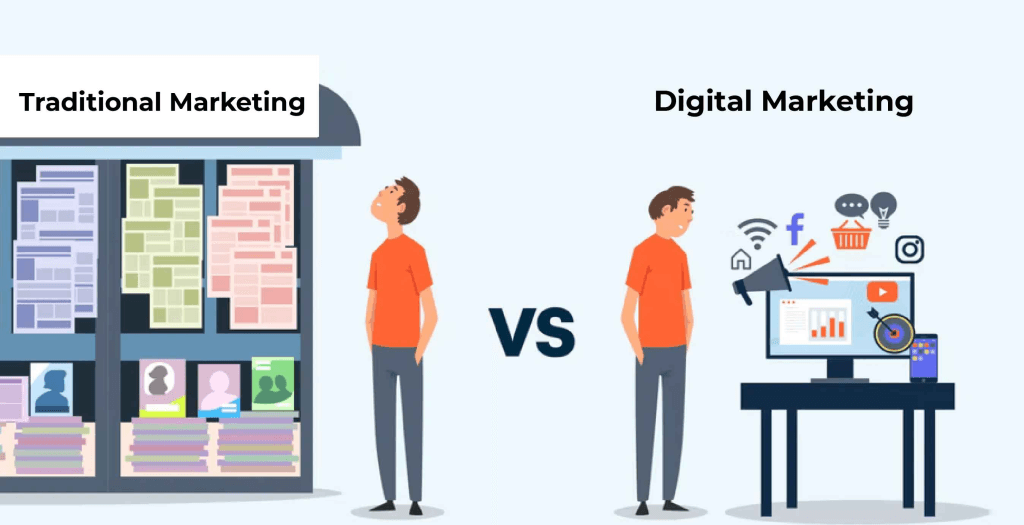
Traditional marketing still has one major strength. Visibility. Large billboards. TV advertisements. Radio campaigns. These make a business feel familiar. People may not buy immediately, but they remember the brand. Digital marketing also builds awareness, but it usually happens through repeated online interactions. Someone might:
- Read your blog.
- Watch your YouTube video.
- Follow your Instagram page.
- Subscribe to your email newsletter.
Over time, your business becomes more recognizable. Different path. Same goal.
Advantages of Traditional Marketing
Even though digital marketing gets most of the attention today, traditional marketing still has its strengths. That’s why many big brands continue to use it.
Here are a few reasons why.
It builds local visibility
If your customers are mainly from one city or one neighborhood, traditional marketing can work really well.
For example:
- A new restaurant can distribute flyers nearby.
- A local gym can put up banners near busy roads.
- A coaching institute can advertise outside schools and colleges.
People who pass by every day start recognizing the brand.
It feels familiar
Many people still trust newspapers, television, and radio. This is especially true for older audiences who may not spend much time online. If your business targets this group, traditional marketing can help you connect with them more easily.
It leaves a lasting impression
Think about a large billboard on a busy road. Thousands of people may see it every single day. Even if they don’t need your product right now, they’ll probably remember your brand later. That’s one reason large companies still invest in outdoor advertising.
Limitations of Traditional Marketing
Traditional marketing also comes with a few challenges.
Higher costs
Printing brochures, buying newspaper space, or running TV ads can be expensive. For small businesses, this often becomes difficult to manage.
Hard to measure
You don’t always know how many people saw your advertisement or became customers because of it. You’re making decisions with limited information.
Limited flexibility
Suppose you notice a mistake in your newspaper advertisement. Unfortunately, it’s already printed. You’ll need to wait for the next edition and pay again. Digital marketing doesn’t have this problem.
Advantages of Digital Marketing
Digital marketing has become popular for a reason. It gives businesses more control, more data, and more opportunities to reach the right audience.
Budget-friendly
You don’t need a huge marketing budget to get started. Many businesses begin with a few hundred or a few thousand rupees. As they start getting results, they increase their spending. This makes digital marketing suitable for startups and small businesses.
Reach customers anywhere
Your business isn’t limited to one city anymore. A handmade product from Nagpur can reach customers in Delhi, Bengaluru, or even another country. That’s a huge advantage.
Easy to track performance
You can see things like:
- How many people visited your website
- Which advertisement got the most clicks
- How many leads you received
- Which page people spent the most time on
These insights help you improve your campaigns instead of guessing.
Better customer relationships
People can interact with your business in many ways.
They can:
- Leave comments
- Send messages
- Share your posts
- Write reviews
- Ask questions
These conversations help build trust over time.
Challenges of Digital Marketing
Digital marketing isn’t perfect either. There are a few things to keep in mind.
Competition is high
Millions of businesses are online. Standing out takes effort. Creating useful content and staying consistent matters more than ever.
Results can take time
If you’re focusing on SEO or content marketing, don’t expect overnight success. It often takes months before you start seeing strong results.
Paid advertising can be faster, but it still needs regular testing and improvement.
Constant learning
Online platforms keep changing. Google updates its search algorithm. Instagram introduces new features. Advertising platforms add new tools. If you stop learning, your strategy can quickly become outdated.
Traditional Marketing or Digital Marketing: Which Gives Better ROI?
ROI means Return on Investment. In simple words, it’s the return you get compared to the money you spend. Let’s imagine two businesses. Business A spends ₹1,00,000 on newspaper advertisements. Business B spends ₹1,00,000 on Google Ads and SEO. Business B can usually track:
- Website visits
- Leads
- Phone calls
- Purchases
- Cost per customer
Business A may only know that sales increased. They won’t always know which advertisement worked best. Because digital marketing provides detailed data, businesses can improve campaigns and reduce wasted spending. That’s why many companies see better long-term returns online.
Which Marketing Method Is Better for Small Businesses?
If you’re running a startup or a local business, your budget probably isn’t unlimited. Every rupee matters. In most cases, digital marketing is the better starting point.
Here’s why.
- Lower advertising costs
- Better audience targeting
- Easy performance tracking
- Faster campaign updates
- Opportunity to compete with larger businesses
A local bakery can rank on Google for “best birthday cakes near me.” A clothing store can reach nearby customers using Instagram ads. A coaching institute can attract students through helpful blog posts and YouTube videos. These methods often cost much less than television or newspaper advertising.
When Traditional Marketing Makes More Sense
Traditional marketing still works well in certain situations.
You should consider it if:
- Your audience prefers offline media.
- You’re promoting a local event.
- Your business depends on nearby customers.
- You want strong offline brand visibility.
- You’re launching a campaign in a specific city.
Many real estate companies still use newspaper advertisements because their audience reads them regularly. Political campaigns also rely heavily on banners, posters, and public events. The marketing method matches the audience.
That’s the key.
When Digital Marketing Is the Better Choice
Digital marketing is usually the better option when you want to:
- Generate leads online
- Sell products through a website
- Reach younger audiences
- Grow your brand nationally
- Track every marketing campaign
- Increase website traffic
- Build long-term visibility through SEO
For many businesses today, these goals are becoming more common. That’s one reason digital marketing continues to grow every year.
Can You Use Both Together?
Yes.
In fact, many successful businesses do exactly that. Imagine a new shopping mall opening.
They might:
- Place billboards around the city.
- Run Facebook and Instagram ads.
- Publish blog articles.
- Share videos on YouTube.
- Send email newsletters.
- Advertise in local newspapers.
Every channel supports the others. Customers may first notice the billboard. Later, they search on Google. Then they visit the website. Finally, they decide to visit the mall. That’s how modern marketing often works. It’s not always about choosing one over the other. Sometimes, the best results come from combining both.
Common Mistakes Businesses Make
Choosing between traditional marketing and digital marketing isn’t the only challenge. Many businesses struggle because of the way they use their marketing budget. Here are some common mistakes.
Trying to Be Everywhere
Some businesses create accounts on every social media platform, print flyers, run newspaper ads, and launch Google Ads all at once. It sounds like a good idea, but it usually spreads the budget too thin. Start with the channels where your audience spends the most time.
Ignoring Your Audience
Your marketing should match your customers. If you’re targeting college students, Instagram and YouTube may work better than newspaper ads. If you’re promoting a local medical clinic for senior citizens, newspapers and local events might still bring good results. Know your audience first.
Not Tracking Results
Many businesses spend money without checking what actually works. Digital marketing makes tracking much easier. Use tools like Google Analytics, Google Search Console, and Meta Ads Manager to understand your performance. If something isn’t working, change it.
Expecting Instant Results
Marketing takes time. A blog won’t rank on Google in a week. A new social media page won’t gain thousands of followers overnight. Stay consistent. Small improvements over several months often lead to the best results.
Traditional Marketing vs Digital Marketing: Quick Comparison
| Feature | Traditional Marketing | Digital Marketing |
|---|---|---|
| Marketing Channel | Offline | Online |
| Cost | Usually higher | Suitable for most budgets |
| Audience Reach | Local or regional | Local, national, and global |
| Targeting | Limited | Highly specific |
| Performance Tracking | Difficult | Real-time tracking |
| Customer Interaction | One-way | Two-way communication |
| Campaign Changes | Slow | Instant updates |
| Best For | Local awareness | Lead generation and online growth |
How to Choose the Right Marketing Strategy
There’s no perfect answer. Instead, ask yourself a few simple questions.
What is your budget?
If you’re working with a limited budget, digital marketing usually gives you more flexibility.
Where are your customers?
If most of your audience spends time online, focus on digital channels. If they’re more likely to read local newspapers or attend community events, traditional marketing may still be worth considering.
What are your business goals?
Want more website visitors?
Need online leads?
Planning to sell products across India?
Digital marketing is usually the better fit.
Trying to promote a local event or increase foot traffic to a nearby store?
Traditional marketing can still play an important role.
Can you combine both?
In many cases, yes. A balanced approach often delivers better results than relying on just one method.
A Real-Life Example
Let’s imagine two businesses. The first is a local grocery store that serves customers within a three-kilometre radius. The owner distributes flyers, advertises in the local newspaper, and places a banner outside the shop. These methods make sense because most customers live nearby. Now think about an online clothing brand.
Its goal is to sell products across India.
Instead of printing thousands of flyers, the brand invests in:
- SEO
- Google Ads
- Instagram marketing
- Email campaigns
- Content marketing
Customers discover the products online, visit the website, and place orders from different cities. Both businesses are successful. The difference is that they chose marketing methods that matched their goals.
Traditional Marketing or Digital Marketing: Which Is the Best Choice?
If someone asked for just one answer, it would be this. For most businesses today, digital marketing offers more opportunities. It costs less to get started. You can reach the right audience. You can measure almost everything. And you can improve your campaigns based on real data. That doesn’t mean traditional marketing is outdated. It still works well for local businesses, offline promotions, and building brand awareness in specific areas. The smartest businesses don’t think about traditional marketing versus digital marketing. They think about what their customers need. Then they choose the channels that help them connect with those people. That’s what really matters.
Frequently Asked Questions
Is digital marketing better than traditional marketing?
For most businesses, yes. Digital marketing offers better targeting, lower costs, measurable results, and the ability to reach customers online. Traditional marketing is still useful for local promotions and offline brand awareness.
What is the biggest difference between traditional marketing and digital marketing?
Traditional marketing uses offline channels like newspapers, television, radio, and billboards. Digital marketing uses online platforms such as Google, social media, email, websites, and search engines.
Which marketing method is more affordable?
Digital marketing is generally more affordable because businesses can start with a small budget and scale campaigns based on performance.
Can small businesses benefit from digital marketing?
Yes. Small businesses can use SEO, Google Business Profile, social media, and paid ads to reach local customers without spending a large advertising budget.
Is traditional marketing still effective?
Yes. Traditional marketing works well for businesses targeting local communities, older audiences, or promoting events in a specific location.
Should businesses use both traditional and digital marketing?
In many cases, yes. Combining both methods helps businesses reach customers through multiple channels and build stronger brand recognition.
Final Thoughts
Marketing has changed a lot over the last decade, and it will keep changing. New platforms emerge, customer behaviour shifts, and technology keeps advancing. But one thing stays the same. People buy from businesses they know and trust. Whether you choose traditional marketing, digital marketing, or a mix of both, your focus should always be on understanding your audience and giving them a reason to choose your business. If you’re just getting started, digital marketing is often the best place to begin. It gives you the chance to learn, test new ideas, and grow without spending a huge budget. As your business grows, you can always combine online and offline marketing to reach even more people. The best strategy isn’t about following trends. It’s about choosing the approach that helps your business grow steadily and serves your customers well.


